
Whether you’re refreshing a tired driveway or adding color to a pool deck, Sherwin-Williams concrete stain is one of the most widely available options on the market. Sold primarily under the H&C brand, these stains come in a range of types and colors built for both interior and exterior concrete surfaces, and they’re stocked at nearly every Sherwin-Williams store in the country.
At CHC Concrete, we install and repair concrete across Southwest Florida, from Fort Myers to Cape Coral, Estero, and Bonita Springs. Our crews see firsthand how Florida’s UV exposure, rain, and sandy soil affect concrete surfaces over time. That perspective matters when choosing a stain, because product selection is only half the equation. Surface prep, concrete condition, and local climate all influence how well a stain holds up.
This guide breaks down the available Sherwin-Williams concrete stain colors, compares solid vs. semi-transparent formulas, and walks through application steps so you can make an informed decision. We’ll also cover where professional concrete work fits in, because staining over cracked or poorly finished concrete rarely ends well.
Why use Sherwin-Williams concrete stain
Sherwin-Williams has built a strong reputation in the concrete coating category through its H&C product line. Most homeowners can walk into a local store, pick up product, and get real in-person staff support rather than waiting on shipping or parsing confusing product listings online. That kind of local accessibility is a genuine advantage in Southwest Florida, where narrow weather windows between rain events mean you may need to start a project quickly.
Wide availability and color matching
One practical reason to choose Sherwin-Williams concrete stain is the store network itself. With locations throughout Fort Myers, Cape Coral, and surrounding communities, you can return for additional product mid-project without a significant delay. Custom color tinting is available in-store, which matters if you want your pool deck, driveway, or patio to closely match the existing exterior palette of your home. Many homeowners underestimate how much variation exists between batches, so buying all your product from the same tinting session helps keep the finish consistent.
Having color-matched stain available locally means you can address coverage gaps the same day rather than waiting on a delivery.
Durability built for exterior use
The H&C line is formulated specifically for exterior concrete, and several formulas include UV inhibitors and water-resistance additives that hold up under the conditions Southwest Florida throws at a surface. You’re dealing with intense direct sun, six months of heavy rain, and concrete that expands and contracts with daily temperature swings. Acrylic-based options in the H&C line are designed to flex with the surface rather than crack and lift the way thinner coatings tend to do after a single wet season.
Products in this line also include clear coverage rate specs and dry time guidance on the label, which takes the guesswork out of estimating materials before you start.
Sherwin-Williams concrete stain types and uses
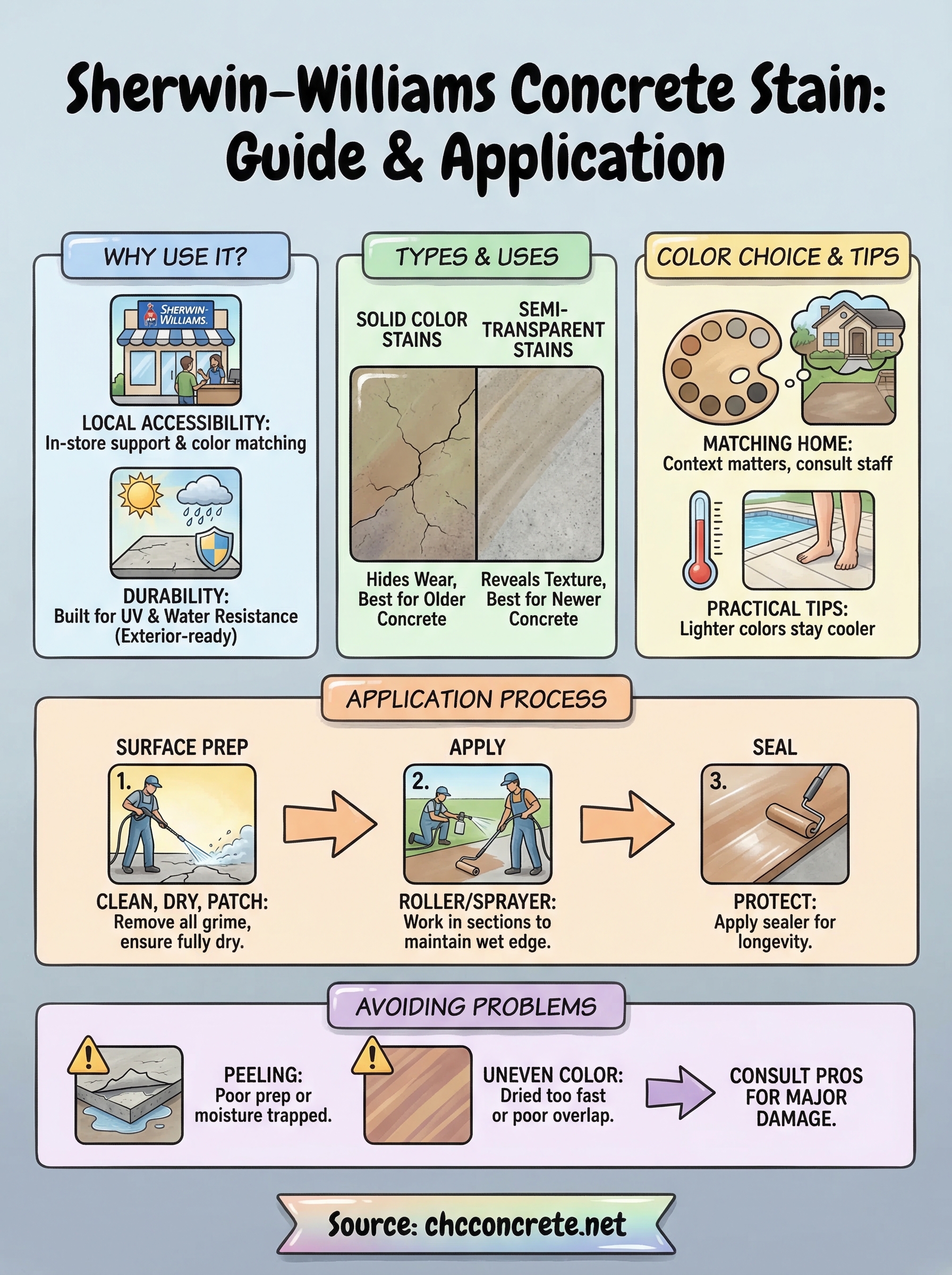
The Sherwin-Williams concrete stain line through H&C breaks down into two main categories: solid color stains and semi-transparent stains. Each serves a different purpose, and picking the wrong one for your surface is one of the more common mistakes homeowners make before they ever open a can.
Solid color stains
Solid stains lay down a full coat of color that completely covers the existing surface. They work well on older or weathered concrete where inconsistencies, staining, or minor discoloration would otherwise show through a lighter formula. If you have a driveway or pool deck that has seen years of sun and foot traffic, solid color is typically the better fit because it hides more than it reveals.
Solid stains also tend to last longer on heavily exposed surfaces like pool decks because the higher pigment load provides additional UV protection.
Semi-transparent stains
Semi-transparent formulas let the natural texture and tone of the concrete show through the color layer. They work best on newer, cleaner surfaces where the concrete itself has a consistent appearance worth preserving. These are a popular choice for interior floors or covered patios where the concrete is in good condition and you want a layered look rather than a fully painted finish.
Color options and how to choose the right look
The H&C line from Sherwin-Williams offers dozens of color options across both its solid and semi-transparent stain ranges, from warm earth tones to cool grays and natural concrete-adjacent neutrals. Choosing the right color means thinking beyond personal preference, because the surface you’re staining and its environment both affect how a color reads once it’s applied and dried.

Matching your home’s exterior
Your pool deck, driveway, or patio exists in visual context with everything around it. A color that looks sharp in isolation can clash with your roof tile, home exterior, or landscaping once it’s down. Sherwin-Williams staff can pull your home’s existing color information and suggest stain options that sit in the same tonal range, which takes most of the guesswork out of the decision.
Bring a photo of your exterior to the store when you’re selecting a concrete stain color, since lighting in the store won’t reflect what the finish looks like under Florida sun.
Practical color tips for Florida surfaces
Lighter colors reflect more heat and stay cooler underfoot, which matters significantly on a pool deck where bare feet are the norm. Darker tones absorb heat and can show water spots more readily after rain. For high-traffic exterior surfaces in Southwest Florida, mid-range warm neutrals tend to perform best visually over time.
How to apply Sherwin-Williams concrete stain
Applying Sherwin-Williams concrete stain correctly comes down to prep work more than technique. You can buy the best product on the shelf, but if the surface isn’t ready, the stain won’t bond properly and you’ll see peeling, uneven color, or early failure within a season.
Surface preparation
Clean concrete is the starting point for any stain application. Remove oil, dirt, mildew, and any previous coatings using a degreaser and a pressure washer. Let the surface dry completely before you open the stain, since moisture trapped in the slab will prevent adhesion. Patch cracks and spalled areas beforehand, because stain does not fill surface damage.
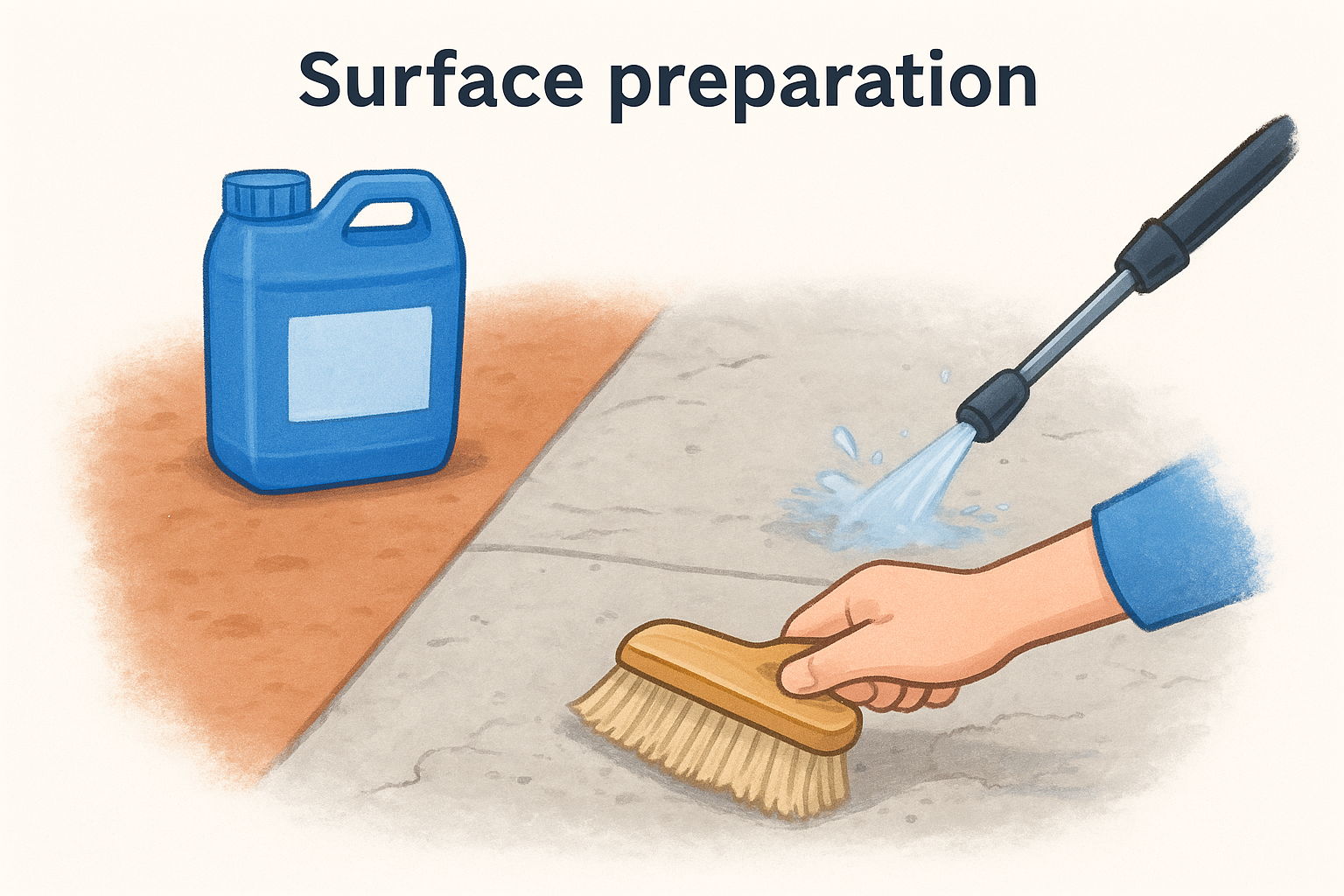
Skipping the drying stage is the most common reason stain peels within the first year on Florida pool decks and driveways.
Application steps
Once the surface is clean and dry, apply the stain using a roller, brush, or pump sprayer depending on the area size and product instructions. Work in manageable sections to maintain a wet edge and avoid lap marks. Apply a second coat after the first dries fully, which the H&C label specifies by product. Seal the surface once the stain cures to extend the finish life under direct sun and rain exposure.
Common problems and how to avoid them
Even with a quality product like Sherwin-Williams concrete stain, you can run into issues if the prep work or application gets rushed. Most failures trace back to a short list of predictable mistakes, and knowing them before you start saves you from redoing the work mid-project or facing early finish failure.
Peeling and adhesion failure
Peeling is almost always a surface prep problem, not a product defect. If the concrete had residual moisture, oil, or an existing coating when you applied the stain, the bond breaks down within months. Test for moisture by taping a piece of plastic sheeting flat against the slab and leaving it overnight. If condensation forms underneath, the surface needs more drying time before you apply anything.
Adhesion failure on pool decks frequently happens when you stain over a previously sealed surface without stripping the old sealer first.
Uneven color and lap marks
Working too slowly in direct sun causes the stain to dry before you blend edges between sections, leaving visible lines across the finished surface. Keeping these points in mind during application prevents most color issues:
- Apply during early morning hours when surface temperatures are lower
- Keep each section small enough to hold a wet edge throughout
- Allow the first coat to dry completely before applying the second
Next steps for your concrete project
Choosing the right Sherwin-Williams concrete stain gets you part of the way there, but the condition of your concrete determines how well any stain performs long term. If you’re working with cracked, spalled, or structurally compromised concrete, staining over the damage won’t hide it and won’t fix it. The finish will fail faster, and you’ll end up spending more to redo the work than you would have spent addressing the underlying issue first.
Before you buy product or pick a color, take an honest look at what you’re working with. Minor surface wear can go through the prep and stain process with good results. Significant cracking, root damage, or drainage problems point to a repair or replacement job before any coating makes sense. If you’re unsure what your concrete actually needs, get a free on-site estimate from CHC Concrete and we’ll give you a straight answer on where things stand.