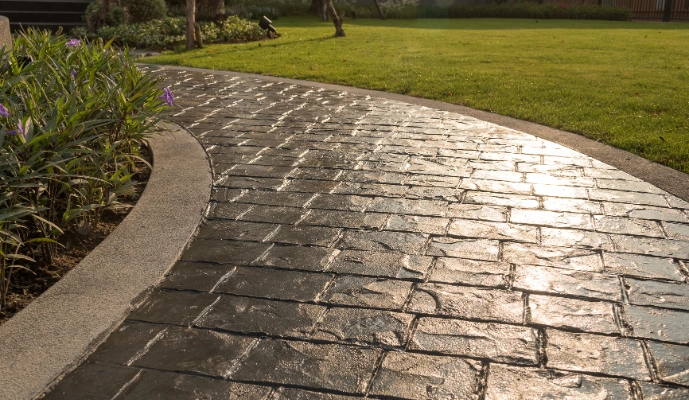
If you’re a homeowner in Fort Myers, Cape Coral, Estero, or Bonita Springs, the stamped concrete driveway cost is probably one of the first things you want nailed down before committing to a project. That makes sense, a driveway is a big pour, and the price swings depending on pattern complexity, color choices, square footage, and who’s doing the work. Getting a reliable number upfront saves you from sticker shock and helps you compare quotes with actual knowledge behind you.
Here’s the thing most pricing guides won’t tell you: Southwest Florida isn’t like the rest of the country. Sandy soil conditions, extreme UV exposure, and heavy rain seasons all affect how a stamped concrete driveway needs to be prepped and poured. That changes the cost. At CHC Concrete, we handle stamped driveway installations across SWFL and see firsthand how local conditions influence both the process and the price. A number pulled from a national average won’t reflect what you’ll actually pay here, so we put together real, region specific pricing to give you a clearer picture.
This guide breaks down 2026 costs per square foot, total project estimates, and every major factor that moves the final number up or down. By the end, you’ll know exactly what drives the price of a stamped concrete driveway in Southwest Florida and where your money actually goes.
Average stamped concrete driveway cost in SWFL 2026
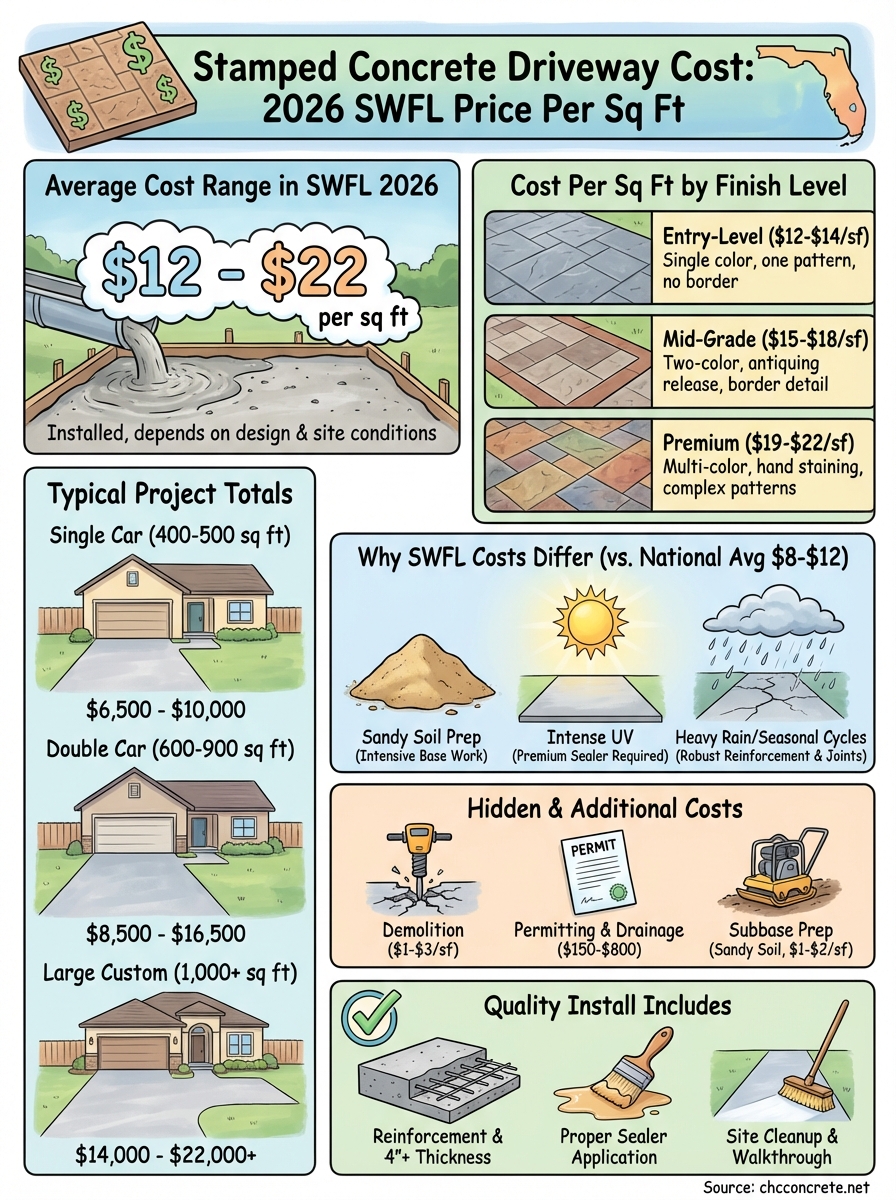
In Southwest Florida, the stamped concrete driveway cost falls between $12 and $22 per square foot installed, depending on design complexity and site conditions. That range covers everything from a basic single color stamp pattern to a multi color, textured finish with a decorative border. Most SWFL homeowners end up paying somewhere between $6,500 and $16,000 for a complete driveway project, with the majority of single car driveways landing in the $7,000 to $10,000 window.
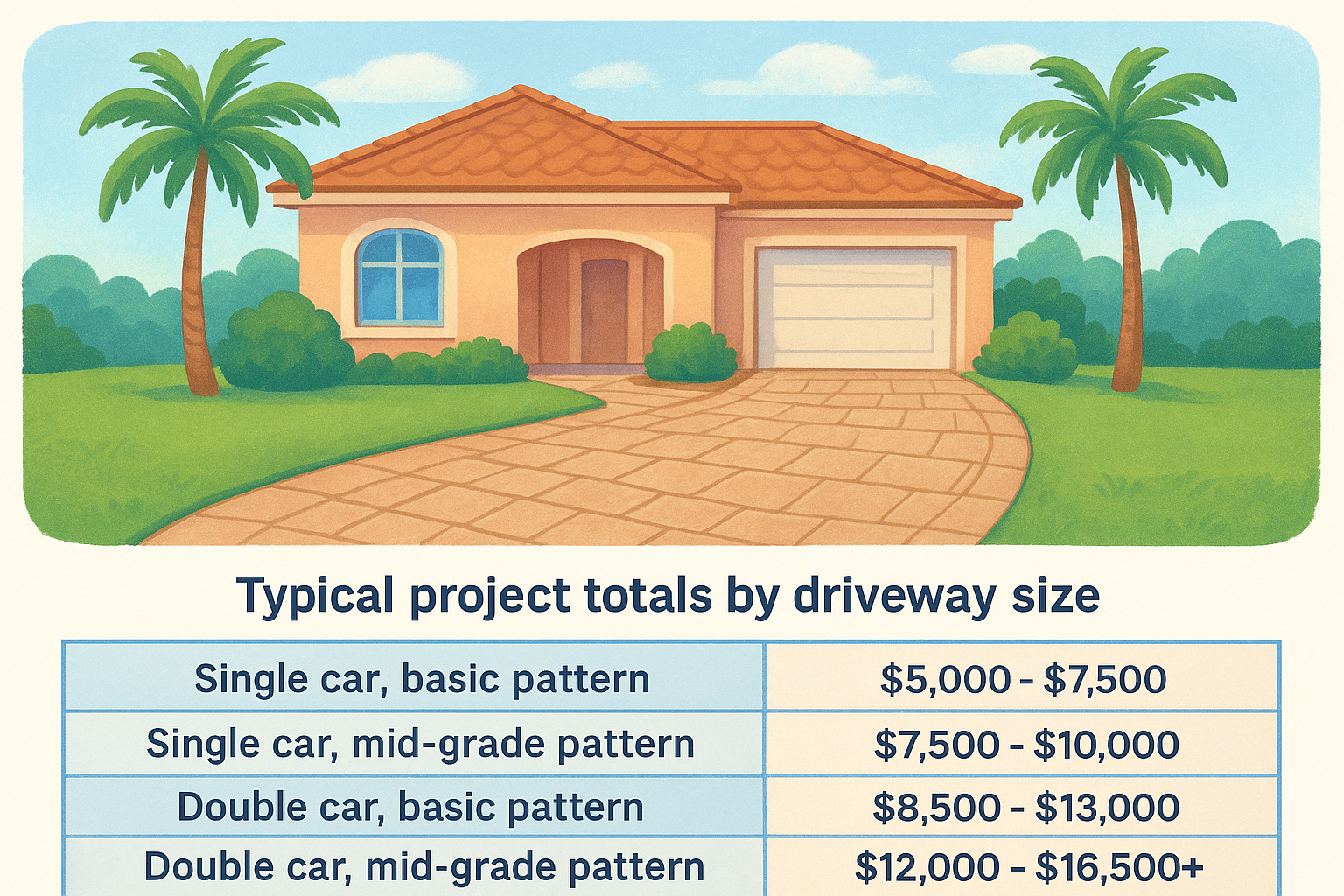
Typical project totals by driveway size
The size of your driveway drives the base cost more than almost anything else. A standard single car driveway runs roughly 400 to 500 square feet, while a double car driveway typically spans 600 to 900 square feet. Larger custom pads, extended aprons, or curved approaches can push the square footage well past 1,000. Use the table below as a general reference for total project costs in 2026 across SWFL:
| Driveway Type | Square Footage | Estimated Total Cost |
|---|---|---|
| Single car, basic pattern | 400 sq ft | $5,000, $7,500 |
| Single car, mid grade pattern | 500 sq ft | $7,500, $10,000 |
| Double car, basic pattern | 650 sq ft | $8,500, $13,000 |
| Double car, mid grade pattern | 800 sq ft | $12,000, $16,500 |
| Large custom pad | 1,000+ sq ft | $14,000, $22,000+ |
These numbers reflect current SWFL labor and material costs and account for the base preparation work this region specifically requires. They do not include demolition of an existing driveway, which adds a separate cost covered later in this guide.
Why SWFL prices run higher than national averages
You’ll find national cost guides quoting stamped concrete at $8 to $12 per square foot. Those numbers aren’t wrong for other parts of the country, but they don’t apply here. Sandy, shifting soil in areas like Cape Coral and Estero requires a more intensive base preparation process than what contractors use in denser soil regions. A proper SWFL pour needs a well compacted subbase, adequate reinforcement, and expansion joints placed with Florida’s wet dry seasonal cycle in mind.
Skipping proper base prep to cut upfront cost is the single most common reason stamped concrete driveways fail prematurely in Southwest Florida.
Beyond soil conditions, UV exposure across SWFL is intense year round, and that affects material selection. Sealer products rated for high UV climates cost more than standard options, and applying them correctly is what protects your color and pattern over time. Labor rates in the region have also risen through 2025 and into 2026 following continued construction demand driven by population growth across Lee and Collier Counties.
How material costs factor into your total
Concrete itself is priced by the yard, and a typical driveway requires between 5 and 12 cubic yards depending on thickness and square footage. Stamped driveways in SWFL are typically poured at 4 to 6 inches thick, with 6 inches recommended when you need to support heavier vehicles or trailers. The stamp patterns, release agents, and integral color additives all stack on top of the base concrete price, usually adding $3 to $6 per square foot over what a plain concrete driveway would cost at the same dimensions.
Cost per sq ft by design and finish level
The design you choose is one of the biggest levers on your stamped concrete driveway cost. A simple single color pattern with no border treatment sits at the bottom of the price range, while a multi color custom layout with a contrasting border and detailed texture can nearly double the per square foot price. Understanding how each level is priced helps you decide where to spend and where to hold back based on your curb appeal goals and actual budget.
Here’s a quick breakdown of how design complexity maps to price in SWFL:
| Finish Level | Price Per Sq Ft | What’s Included |
|---|---|---|
| Entry level | $12, $14 | Single color, one pattern, no border |
| Mid grade | $15, $18 | Two color, antiquing release, border detail |
| Premium | $19, $22 | Multi color, hand staining, complex patterns |
Entry level: single color, simple patterns
At the entry level ($12 to $14 per square foot), you get one integral color mixed directly into the concrete and one stamp pattern applied uniformly across the surface. Common choices include a basic slate texture, a simple cobblestone, or a wood plank layout. These designs hold up just as structurally as higher end finishes. The lower cost comes from faster installation and simpler color application, not from any reduction in concrete quality or pour thickness.
Mid grade: two color designs with border detail
Mid grade work runs $15 to $18 per square foot and adds a secondary color applied as an antiquing release or hand applied accent, along with a contrasting border running around the driveway perimeter. The border adds labor because it typically uses a different stamp pattern than the main field, which requires two separate tool setups and more precise transitions. Most SWFL homeowners land in this range because the visual upgrade is significant relative to the cost increase, and a bordered driveway reads noticeably more finished from the street.
A contrasting border gives you a high end look without a full custom design, making it the most cost effective upgrade you can add to a standard stamped driveway.
Premium: custom multi color and textured finishes
At $19 to $22 per square foot, you’re paying for layered color work, including multiple rounds of hand staining and more complex pattern combinations across the full driveway surface. Some premium installs also include saw cut scoring lines to mimic large format tile or individual paver shapes. This level demands the most on site time and requires an experienced crew to execute well, particularly in Florida’s direct sun, where exposed concrete can begin to skin over faster than contractors work in cooler climates.
Site prep and hidden costs in Florida
Site preparation is where a lot of stamped concrete driveway cost surprises show up. In Southwest Florida, the combination of sandy soil and seasonal flooding means the groundwork underneath your driveway matters just as much as what’s poured on top. Cutting corners on base prep leads to cracking and sinking within a few years, which costs more to repair than doing the work right the first time.
Demolition and removal
If you already have a concrete or asphalt surface, tearing it out adds $1 to $3 per square foot to your total project cost. For a 600 square foot driveway, that’s $600 to $1,800 before the new work even starts. Confirm with your contractor whether demo is included in the quote, because some estimates present a number that assumes a clean, empty lot.
Always ask your contractor to separate demolition as a line item in any written estimate so you know exactly what you’re paying for.
What’s included in that demolition cost typically covers:
- Breaking and removing the existing slab
- Hauling debris off site
- Light grading to prepare the area for subbase work
Subbase preparation for sandy soil
Florida’s sandy soil doesn’t compact the same way as clay heavy soil in other regions. A proper SWFL subbase requires grading, compaction, and often the addition of a compacted fill layer before the concrete goes down. This adds $1 to $2 per square foot in preparation costs that don’t always appear as a separate line item in lower priced quotes.
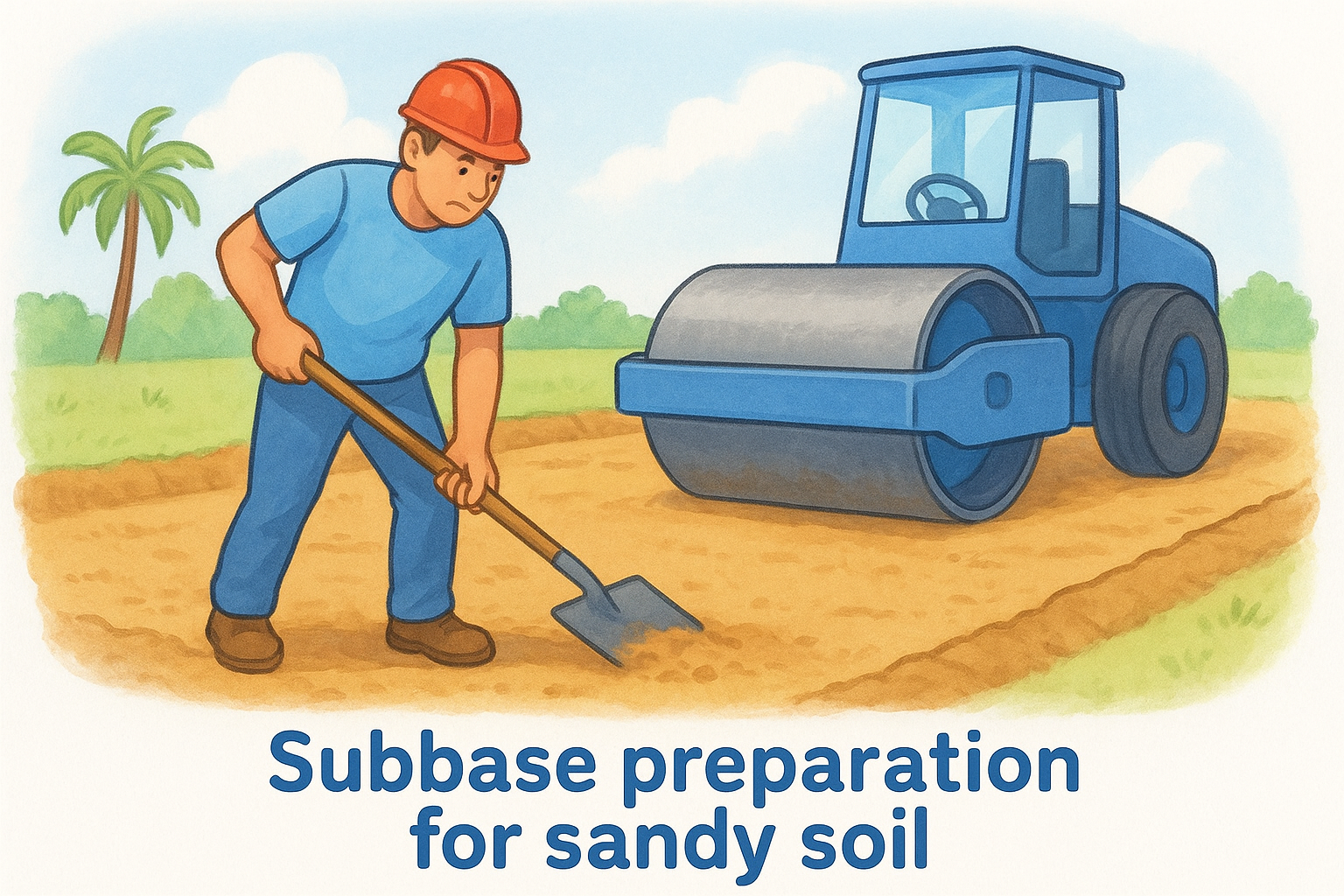
Without proper compaction, your driveway sits on unstable ground that shifts during heavy rain events. Edge cracking and surface separation are the most common results, and both trace directly back to inadequate base work rather than any problem with the concrete itself.
Permitting and drainage fees
Some SWFL municipalities require permits for driveway installations, particularly in Cape Coral and areas with active stormwater ordinances. Permit fees typically run $150 to $400, and some jurisdictions require a drainage review to confirm the new surface doesn’t redirect runoff onto neighboring properties.
If your lot has existing drainage issues, your contractor may recommend installing a channel drain or adjusting the apron grade, which adds $300 to $800 depending on scope. These costs aren’t always visible upfront, but a reputable contractor brings them to your attention during the estimate, not after the pour.
What a quality install includes
When you’re comparing stamped concrete driveway cost quotes, the numbers only make sense if you know what each one actually covers. A lower quote often signals that something in the install process is being skipped or abbreviated. Knowing what a proper installation includes gives you the ability to ask the right questions and identify which contractor is cutting corners before you sign anything.
Reinforcement and pour thickness
A properly installed stamped concrete driveway starts with steel rebar or wire mesh reinforcement laid across the entire slab before the pour begins. In Southwest Florida, where soil movement and moisture fluctuation put constant stress on concrete, reinforcement is not optional. Your contractor should specify the reinforcement type in writing, and you should confirm the pour thickness is at least 4 inches, with 5 to 6 inches recommended for any area that sees vehicle traffic.
Expansion joints are part of this process too. Control joints cut into the surface at regular intervals allow the concrete to flex through seasonal temperature and moisture changes without cracking randomly. A crew that skips joint placement is leaving your slab vulnerable to the exact conditions SWFL dishes out every summer.
Ask your contractor to walk you through the reinforcement plan before the pour so you know the schedule and what to expect on install day.
Sealer application and color protection
Stamping and coloring the slab is only half the work. A high quality penetrating or film forming sealer applied after the surface fully cures protects the color from UV fade and the texture from surface wear. In SWFL’s direct sun, an unsealed stamped driveway will show visible color loss within one to two seasons, which defeats the entire investment in the decorative finish.
The sealer application requires a clean, dry surface and proper dwell time. Rushing this step or applying sealer to concrete that hasn’t fully cured leads to bubbling and peeling, which requires stripping and reapplication at your cost.
Job site cleanup and final walkthrough
A professional crew leaves your property clean when the work is done. That means concrete slurry, form boards, and excess materials are removed from the site before the final invoice is presented. You should also receive a walkthrough of the finished driveway where the contractor explains curing time, first use restrictions, and the resealing schedule you’ll need to follow to protect the surface long term.
How to estimate your driveway price fast
You don’t need to wait for a contractor visit to get a working number for your stamped concrete driveway cost. A quick back of envelope estimate gives you a realistic budget range before you call anyone, so you walk into that conversation knowing what’s reasonable rather than relying entirely on what a salesperson tells you.
Measure your square footage first
Start by measuring the length and width of your driveway area in feet and multiplying them together. If your driveway has an irregular shape, break it into rectangles, measure each section separately, and add the totals. Most single car driveways in SWFL run 400 to 500 square feet, and most double car configurations fall between 600 and 900 square feet.
Use this simple process to get your number:
- Measure the full length of your driveway from the garage apron to the street
- Measure the width at the widest point
- Multiply length by width for a base square footage
- Add any extra pad area, such as a turnaround or side extension
Apply the price range to your numbers
Once you have your square footage, multiply it by the per square foot range that matches your design goals. For a basic single color pattern, use $12 to $14 per square foot. For a mid grade two color design with a border, use $15 to $18. For premium custom work with hand staining, use $19 to $22. That gives you a low and high estimate before any site specific adjustments.
Use the mid grade range as your planning number if you’re unsure what level you want, since most SWFL homeowners end up there anyway.
From there, add $1,000 to $1,800 if you have an existing surface to remove, and budget $200 to $400 for permitting if your municipality requires it. These two line items are the most common sources of budget surprises, and factoring them in early keeps your estimate realistic.
Cross check your quote before signing
When a contractor hands you a written quote, compare the per square foot number against your own estimate to confirm they’re in the same range. A quote that comes in significantly below $12 per square foot for a full SWFL install is almost always missing something, whether that’s base prep, reinforcement, sealer, or all three. Ask for a line item breakdown so you can see exactly where the number comes from rather than accepting a single lump sum figure.
Next steps for your driveway plan
Now that you understand what drives stamped concrete driveway cost in Southwest Florida, you’re in a strong position to move forward. Pull your measurements, pick a design level that fits your budget, and factor in demo and permitting before you call anyone. Walking into that first conversation with real numbers means you can evaluate every quote on its merits rather than guessing.
Choosing the right contractor matters just as much as choosing the right pattern. Licensed, insured contractors who know SWFL soil conditions are the ones who will prep your base correctly, pour at the right thickness, and seal the surface before they leave your property. Cutting that corner costs you far more in repairs later than any savings upfront.
Ready to get a real number for your project? Contact CHC Concrete for a free on site estimate and get a clear, line item quote from a licensed SWFL concrete contractor.