Key Takeaways:
- Paver installation costs in the U.S. typically range from $10 to $30+ per square foot depending on material, design complexity, and site conditions.
- Southwest Florida homeowners face unique cost factors — including soil prep, heat tolerance, and drainage requirements — that can shift your final budget.
- Getting a professional assessment before committing to any paver project can save you significant money and prevent costly mistakes down the road.
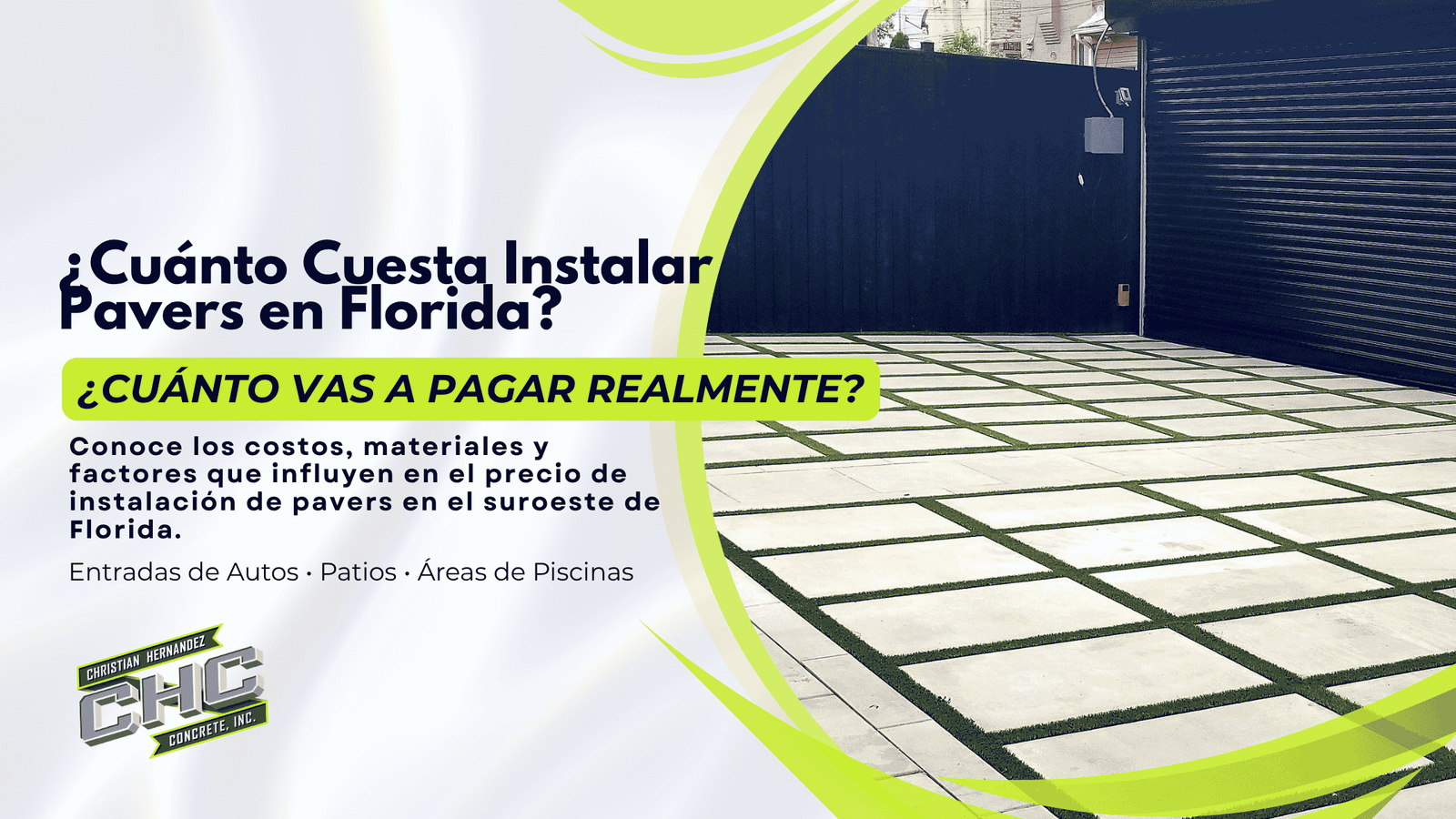
If you’re pricing out a new driveway, patio, or pool deck, paver installation is probably on your radar. And for good reason — pavers offer flexibility, curb appeal, and relatively easy repair access compared to poured concrete slabs. But the cost side of the equation can get complicated fast.
This guide breaks down what drives paver installation costs, how pricing differs by project type, what to expect in a Southwest Florida market, and how to compare your options before signing any contract.
What Is the Average Cost to Install Pavers?
Nationally, paver installation runs between $10 and $30 per square foot, installed. That wide range exists because the final number depends on a stack of variables — the type of paver, the size of the project, how much prep work the site needs, and who’s doing the job.
Here’s a general breakdown by common paver materials:
| Paver Material | Avg. Cost Per Sq. Ft. (Installed) | Durability | Best For |
|---|---|---|---|
| Concrete Pavers | $10 – $18 | High | Driveways, patios |
| Clay Brick Pavers | $14 – $22 | Very High | Walkways, patios |
| Natural Stone (Travertine) | $18 – $30+ | Very High | Pool decks, luxury patios |
| Tumbled Pavers | $12 – $20 | High | Pathways, pool surrounds |
| Porcelain Pavers | $15 – $28 | Extremely High | Patios, modern designs |
These figures represent typical ranges across the U.S. market. In a coastal region like Southwest Florida, material costs and labor rates can push you toward the higher end of any given bracket.
Key Factors That Affect Your Paver Installation Cost
1. Square Footage and Project Scope
The most obvious factor — larger projects cost more in total, but often less per square foot. Contractors can mobilize equipment, order materials in bulk, and distribute fixed labor costs more efficiently across bigger jobs. A 200-square-foot patio will almost always cost more per square foot than a 1,000-square-foot driveway installation.
2. Material Selection
This is where homeowners often get surprised. Not all pavers are created equal, and the cost gap between basic concrete pavers and premium travertine or porcelain can be significant. For pool decks and outdoor living spaces in Florida, travertine is a popular choice — it stays cooler underfoot in direct sun and has a natural aesthetic that holds up in the heat and humidity.
3. Site Preparation
This is the hidden cost that trips people up. Before any paver goes down, the ground needs to be excavated, graded, and compacted. A stable base layer — typically compacted gravel or crushed stone — has to be installed. If your yard has poor drainage, significant slope issues, or unstable soil (common in parts of Southwest Florida near flood zones), prep costs can escalate quickly.
4. Pattern Complexity and Design
A simple running bond or grid pattern is faster to install than a herringbone, basketweave, or custom geometric design. The more cuts required and the more intricate the layout, the more labor hours go into the job. Circular patterns, inlays, and borders all add to installation time.
5. Edging and Restraints
Pavers need to be bordered and held in place with proper edging restraints — otherwise, they can shift over time, especially in areas with freeze-thaw cycles or heavy rainfall. In Florida, heavy rain events can gradually erode base material if edging isn’t properly set. This step adds cost but is essential for the long-term stability of any paver surface.
6. Sealing
Most professionals recommend sealing pavers after installation to protect against staining, moisture penetration, and the Florida sun’s UV damage. Sealing typically costs an additional $0.50 to $2.00 per square foot depending on the sealer type and number of coats applied. It’s not always included in base installation quotes, so always ask.
Cost Breakdown by Project Type
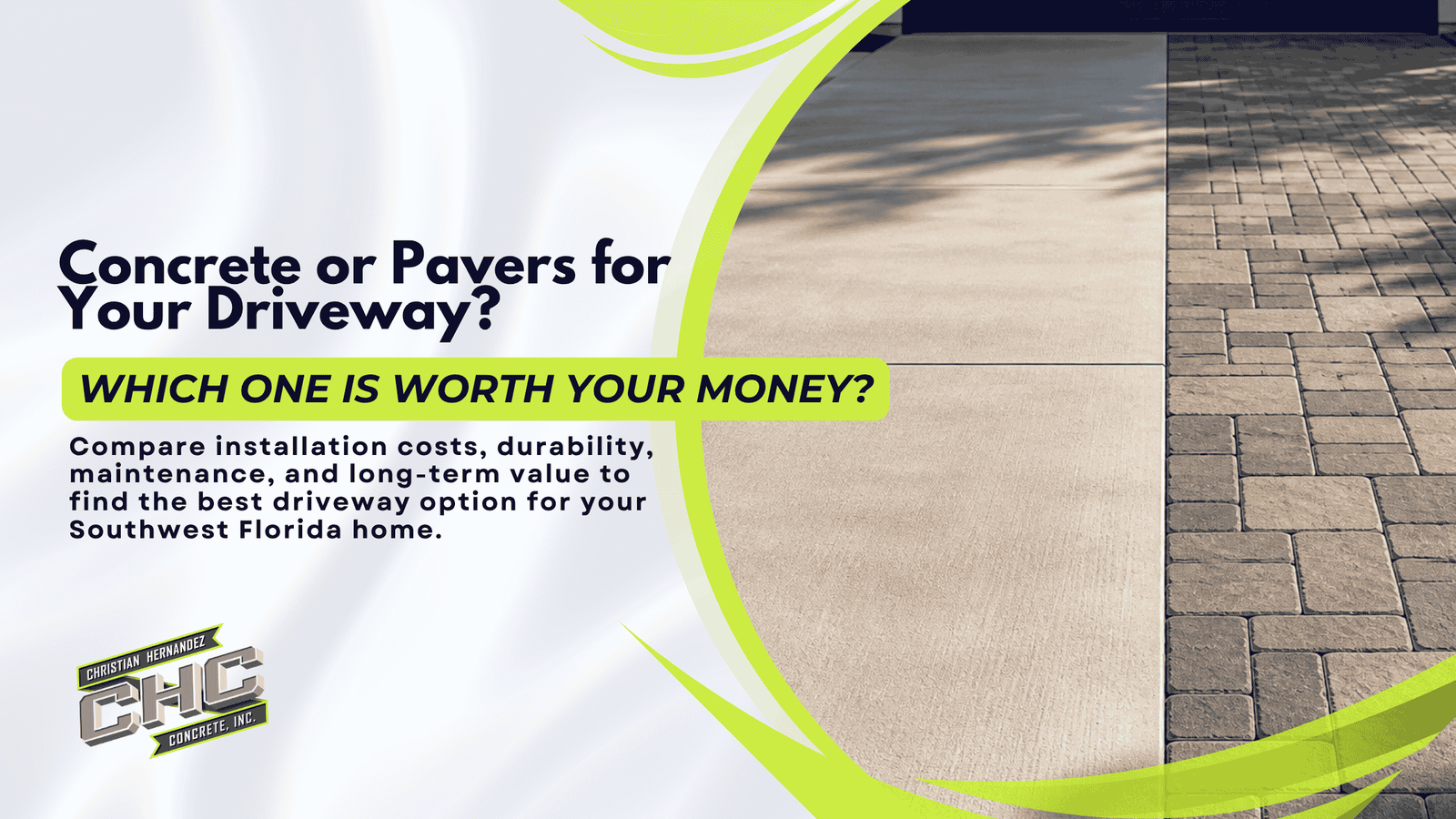
Paver Driveway Installation
Driveways require some of the heaviest base preparation because they have to support the weight of vehicles. Expect 6 to 8 inches of compacted base material under a standard driveway paver installation. Labor and material costs together for a typical two-car driveway (around 400–600 sq. ft.) often land in the $6,000 to $15,000 range, with premium materials or complex layouts pushing higher.
You should also factor in any curb cuts, transition edging to the street, and drainage channel installation if your driveway grade doesn’t naturally shed water away from the structure.
Paver Patio Installation
Patios are generally the most budget-friendly paver project because load requirements are lighter and site prep is simpler. A 300-square-foot patio using mid-grade concrete pavers might run $3,500 to $7,000 installed, depending on design and site conditions. Step into natural stone or porcelain territory and that number climbs.
If you’re adding a paver patio alongside an outdoor kitchen, pergola, or built-in fire feature, those elements are typically quoted separately but need to be planned for simultaneously so the installation sequence works correctly.
Paver Pool Deck Installation
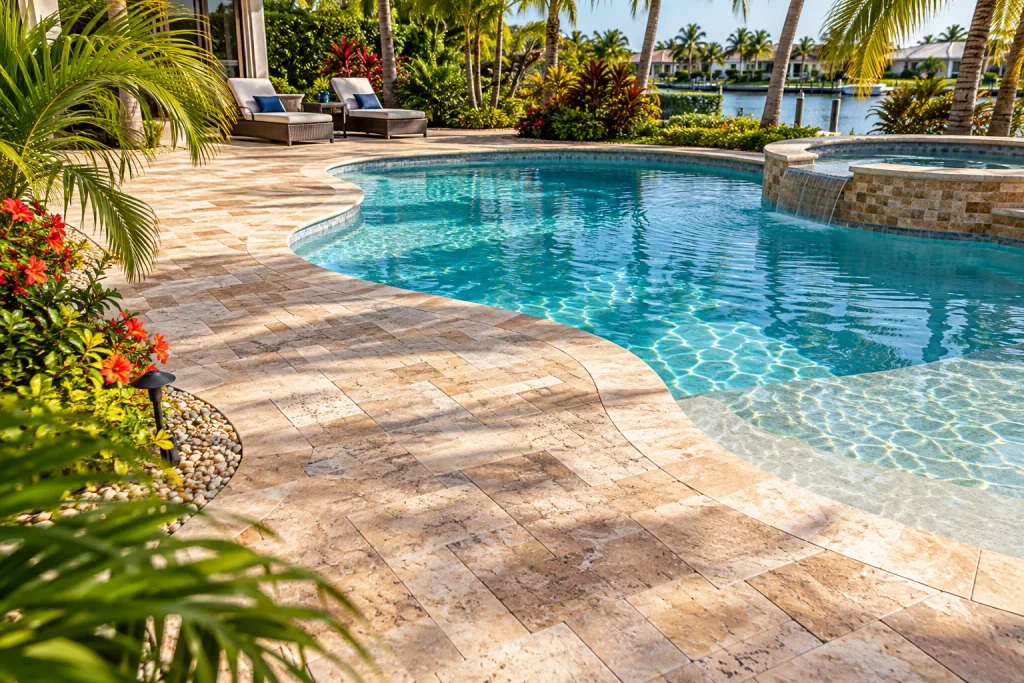
Pool decks in Florida are a category of their own. The material needs to handle constant moisture, chemical exposure from pool water splash-off, and intense UV exposure. Travertine pavers are consistently one of the most recommended options here — they’re naturally slip-resistant, stay cooler than concrete in direct sun, and have a refined appearance that holds up over time.
Pool deck installation costs often run $15 to $30+ per square foot for travertine, and a full-size pool deck can easily require 600 to 1,200 square feet of coverage. Budget planning should include coping, any raised bond beam sections, and drainage slope requirements.
You can explore professional paver installation services to understand the full scope of what a quality installation includes before you start collecting quotes.
Paver Installation vs. Poured Concrete: Which Costs More?
This is one of the most common questions homeowners ask, and the honest answer is: it depends on the application and your long-term goals.
Poured concrete is generally cheaper upfront — typically $6 to $12 per square foot installed for a standard residential application. But pavers offer some real advantages:
- Individual pavers can be removed and replaced if one cracks or a utility line needs access underneath.
- Paver surfaces don’t crack the same way poured slabs do — they flex as a system rather than fracturing under pressure or ground movement.
- The aesthetic range is dramatically wider, which can meaningfully affect your home’s resale value and outdoor living appeal.
That said, poured concrete with decorative finishes (stamped, exposed aggregate, brushed) can close that visual gap while still being more cost-effective upfront. The right choice depends on your budget, the specific use case, and how long you plan to stay in the home.
What Southwest Florida Homeowners Should Know About Paver Costs
If you’re in Fort Myers, Cape Coral, Naples, Bonita Springs, or anywhere else in the region, a few local factors will influence your quote:
Soil Conditions — Southwest Florida’s sandy, occasionally unstable soil means base preparation is often more intensive than you’d find in drier inland markets. Proper compaction and sometimes additional stabilization material is needed.
Drainage Requirements — This region gets significant rainfall, especially during hurricane season. A poorly graded paver installation can funnel water toward your foundation or create pooling zones. Professional contractors account for drainage slope in the base design.
Heat and UV Exposure — Material selection matters more here than in most U.S. markets. Lighter-colored pavers reflect heat better. Travertine and certain porcelain pavers are engineered (or naturally suited) to perform in high-heat, high-UV environments without significant fading or surface degradation.
Permitting — Depending on your municipality and project scope, a permit may be required for driveway replacement or significant hardscape additions. Your contractor should be familiar with local permitting requirements in Fort Myers, Cape Coral, and surrounding areas.
How to Get an Accurate Paver Installation Quote
Getting accurate numbers requires more than a phone call. Here’s what a thorough quoting process should include:
- Site visit — Any reputable contractor should walk your property before issuing a number. Soil conditions, drainage, existing structures, and access all affect the estimate.
- Detailed written scope — Your quote should specify square footage, base depth, material type and grade, pattern, edging type, and whether sealing is included.
- Timeline and phasing — Large projects may need to be staged. Ask whether the quote includes cleanup, base debris removal, and site restoration.
- Warranty information — Ask about both the material warranty and any workmanship guarantee the contractor provides.
- References and reviews — Look for documented, verifiable reviews. CHC Concrete has earned 150+ five-star Google reviews across Southwest Florida — you can read verified client feedback here to understand what the experience actually looks like.
When comparing quotes, price isn’t the only variable. A lower bid that skips proper base preparation will cost you more in repairs within a few years than paying appropriately upfront for a job done right.
Common Hidden Costs to Watch For
Even a detailed quote can miss line items that show up during execution. Be aware of:
- Root removal or tree stump grinding if vegetation is in the project footprint
- Fill material if grading requires building up low areas before base installation
- Dumpster and debris hauling for large demo or excavation jobs
- Utility line locating — required before any excavation
- Additional drainage infrastructure like French drains, channel drains, or dry wells if site conditions require it
If you have questions about what your specific project might involve, contacting CHC Concrete directly for a local assessment is a practical first step. With 35+ years of experience in Southwest Florida, the team can give you a realistic, grounded picture of what your project actually requires — not a ballpark built on assumptions.
Maintenance Costs After Installation
Pavers require ongoing care, and factoring this into your total cost of ownership matters:
- Re-sanding joints every few years as polymeric sand compresses or washes out
- Re-sealing every 2 to 5 years depending on exposure and sealer type
- Spot replacement of cracked or stained pavers as needed (significantly easier than slab repair)
- Weed and moss management in joint material over time, especially in humid Florida conditions
These maintenance costs are relatively modest, but they exist. Compared to a poured concrete slab, the advantage is the ability to address specific problem areas without tearing out the entire surface.
Conclusion
Paver installation is a real investment — one that can dramatically improve your property’s function, appearance, and value when it’s done correctly. The cost range is genuinely wide because the variables are real: material selection, project size, site conditions, design complexity, and regional labor rates all play a role.
In Southwest Florida specifically, working with a contractor who understands local soil behavior, drainage requirements, and the performance demands of the Florida climate isn’t optional — it’s essential to getting an installation that holds up long-term.
If you’re a homeowner in Fort Myers, Cape Coral, Naples, Bonita Springs, Estero, or the surrounding SWFL area and want a professional assessment of what your paver project would realistically cost, reach out to CHC Concrete for a consultation. With over three decades of local experience and a track record of completed projects across the region, they’re equipped to give you straight answers — no pressure, no guesswork.
Frequently Asked Questions About Paver Installation Cost
How much does it cost to install a paver patio per square foot?
Most paver patios run between $10 and $22 per square foot installed, depending on the material and site conditions. Travertine and porcelain options at the higher end of the range often justify the premium through longevity and aesthetic appeal, especially in Florida’s climate.
Is it cheaper to install concrete or pavers?
Poured concrete is typically less expensive upfront — often $6 to $12 per square foot compared to $10 to $30+ for pavers. However, pavers offer easier long-term repairs and greater design flexibility, which can make them a better value over the full life of the surface.
How long does paver installation take?
A standard residential patio or driveway paver installation typically takes 2 to 5 days depending on size, design complexity, and base preparation required. Larger or more detailed projects may run longer.
Do pavers increase home value?
Yes, quality paver installation — particularly for driveways, patios, and pool decks — consistently adds perceived value and curb appeal. In a competitive real estate market like Southwest Florida, well-executed hardscaping can meaningfully differentiate a property.
Do I need a permit to install pavers in Southwest Florida?
Permit requirements vary by municipality. In some areas of Fort Myers, Cape Coral, and surrounding communities, driveway replacement or new hardscape installations above a certain square footage may require a permit. Your contractor should be able to advise based on your specific address and project scope.